Our Process
Surface Preparation
We begin by thoroughly cleaning the damaged crack or defect to remove dirt, debris, loose asphalt, and moisture. Proper surface preparation is critical to ensure the mastic bonds tightly and performs as intended.
Material Heating & Conditioning
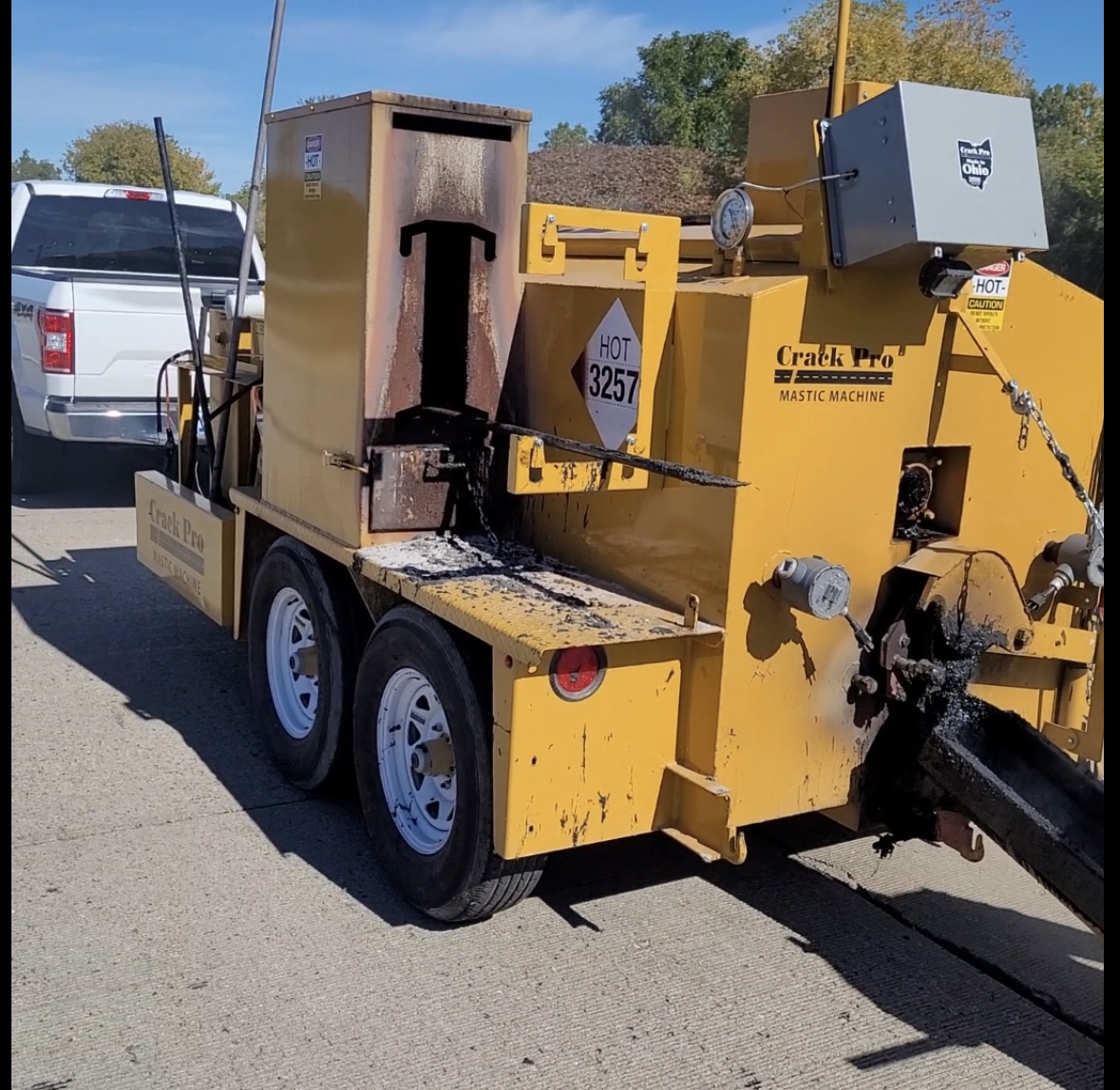
The mastic is heated in a specialized melter until it reaches the precise working temperature. This allows the material to flow properly while maintaining its strength, flexibility, and aggregate structure.
Mastic Application
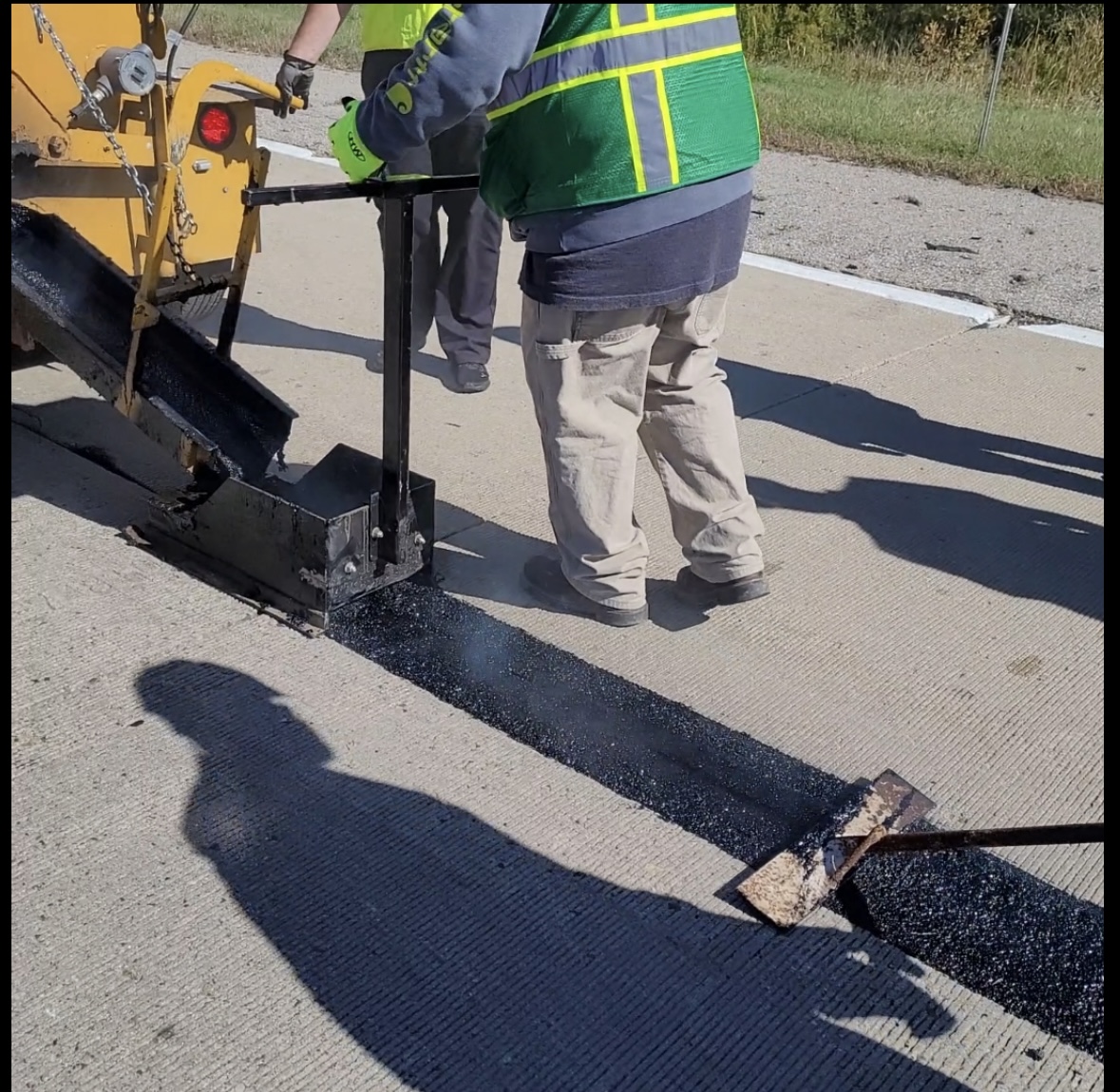
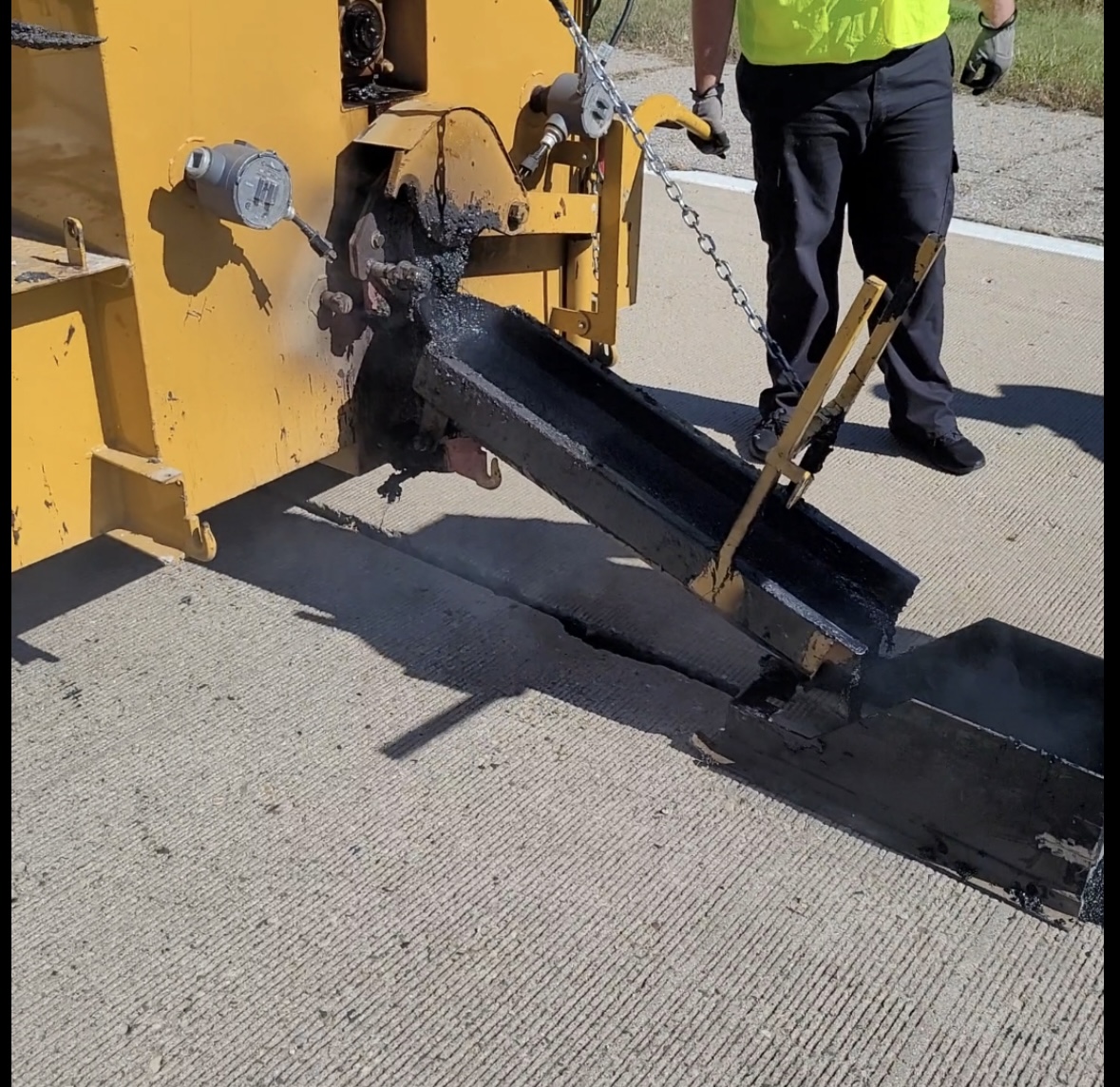
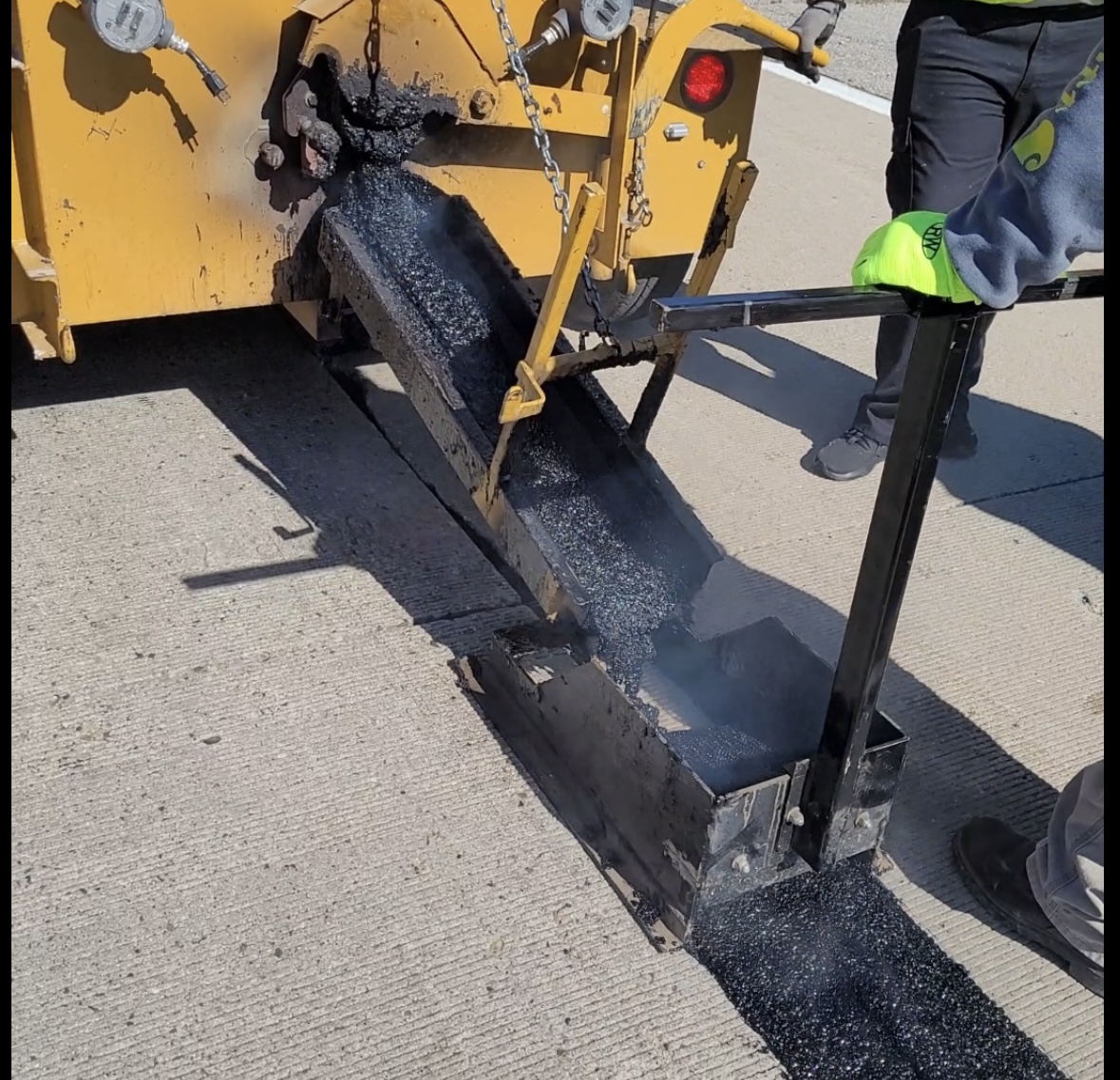
The heated mastic is dispensed into a rectangular drag-box applicator and pulled directly across the damaged area. This forces material down into the opening while creating a reinforced surface band that strengthens the surrounding pavement.
Final Set & Traffic Readiness
Once applied, the mastic is allowed to set and harden before reopening the area to traffic. The finished repair creates a waterproof, flexible, and load-resistant seal designed to withstand movement and heavy traffic.
FAQ
How is Mastic Different From Crack Filling?
Mastic is a binder mixed with aggregate, creating a reinforced repair for larger cracks and distressed areas. Crack filling uses a flexible rubber material designed to seal standard cracks and move with the pavement.
Is Mastic Repair Permanent?
Mastic is a long-lasting repair, more durable than rubber crack filling, but like all asphalt maintenance solutions, it is not permanent. It significantly extends pavement life when used properly and at the right time, delaying the need for full-depth replacement.
How Long Does Mastic Take to Cure?
Mastic typically sets quickly and is often ready for traffic within a few hours, depending on temperature and site conditions.
Is Mastic Better Than Full Asphalt Replacement?
Mastic is not a replacement for full reconstruction when base failure is present. However, when the underlying structure is sound, mastic provides a powerful middle-ground solution between basic crack filling & full replacement.
Can Mastic be Used on Parking Lots & Roadways?
Yes. Mastic is commonly used on commercial lots, industrial sites, & roadway surfaces where durability, flexibility, and moisture protection are critical.
More Asphalt Services: Sealcoating - Crack Filling - Line Striping - Asphalt Repair - Catch Basin Repair - Mastic Repair
Ready to Schedule Mastic Repair?
Protect your asphalt. Stop water intrusion.
Extend pavement life.
Areas We Service
Flint, Burton, Grand Blanc, Fenton, Linden, Davison, Lapeer, Swartz Creek, Clio, Troy, Waterford, Howell, Owosso, Durand, Lansing, Saginaw, and the surrounding areas.